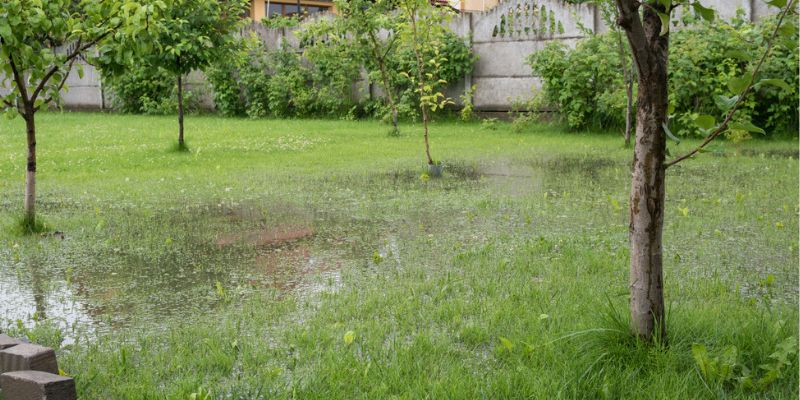
Does your swampy backyard leave you tiptoeing around puddles instead of enjoying your lawn? In Atlanta’s clay-heavy soil, a single thunderstorm can turn picture-perfect grass into a muddy mess that invites mosquitoes, drowns plants, and even threatens your home’s foundation.
The good news is that you don’t have to live with standing water. In this guide, Urban Nature Landscape walks you through the real-world fixes—from simple grading tweaks to full drainage systems-that transform soggy yards into dry, usable spaces. Ready to swap mud for manicured green? Let’s dive in.
Why Every Yard Needs Good Drainage
Standing water does more than soak your shoes. It drowns grass roots, attracts mosquitoes, and can creep into your foundation. In Atlanta, our red‐clay soil and sudden thunderstorms make the problem worse. A swampy backyard not only looks messy but can lower home value and invite costly repairs.
Five Clues You’re Headed for Trouble
- Lingering Puddles – Water sticks around longer than 24 hours after a storm.
- Muddy Pet Tracks – Your dog leaves paw-print art across the kitchen floor.
- Yellow or Mossy Grass – Roots suffocate, and moss moves in.
- Gutter Splash Marks – Dirt stains or mildew stripes on brick show where water bounces back.
- Hair-line Foundation Cracks – Extra moisture widens tiny gaps in concrete.
If you recognize two or more signs, keep reading—your yard is begging for a drainage upgrade.

What Turns a Garden Into a Swampy Backyard?
- Clay-Heavy Soil: Georgia’s famous red clay acts like a sponge, holding moisture.
- Flat Lots: Water has nowhere to go if the land is pancake-level.
- Roof Runoff: Downspouts that end beside the porch dump gallons of rain right where you walk.
- Hardscape Overload: Concrete patios and driveways shed water instead of absorbing it.
- Compaction: Heavy foot traffic presses soil particles together, blocking natural channels.
Yard Drainage Solutions
1. Improve the Slope
Add and smooth extra topsoil so your yard drops about ¼ inch per foot away from the house. This gentle grade lets gravity pull rainwater off patios and flowerbeds instead of turning them into a swampy mess.

2. Aerate & Amend Soil
Clay soil acts like a sponge. Core-aerating punches tiny holes that loosen compaction, and working compost plus coarse sand into the top six inches creates pockets where water can slip through instead of pooling.
3. Extend Downspouts
Most standing water starts at the gutters. Snap-on extensions or buried solid pipe carry roof runoff several feet from your foundation, keeping both basements and lawns drier after every storm.
4. French Drain
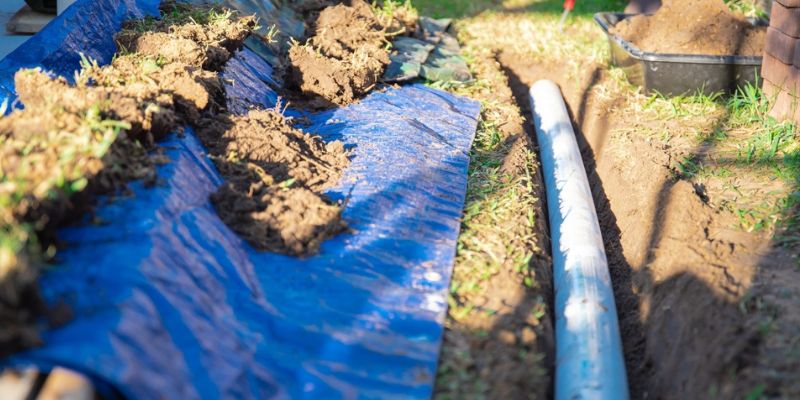
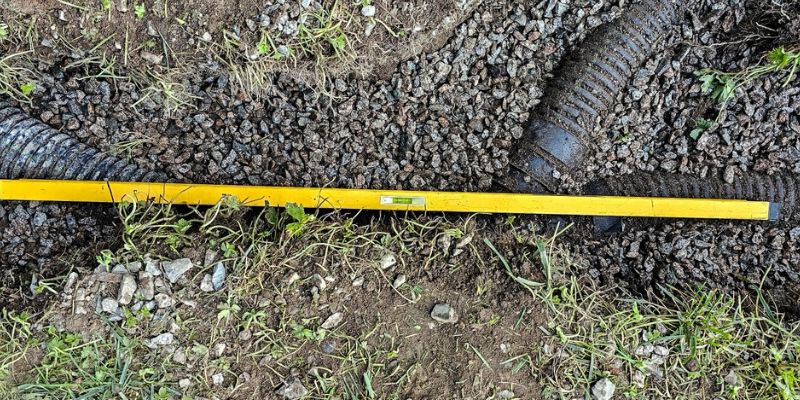
This hidden hero is a perforated pipe wrapped in gravel and fabric. Buried under sod, it catches excess groundwater and channels it downhill—great for narrow, soggy strips alongside patios, fences, or walkways.
5. Trench (Channel) Drain
Picture a slim slot or grated channel set flush with your driveway, garage edge, or pool deck. It snags fast-moving surface water before it spreads across the yard and routes it safely to a discharge point.
6. Catch Basin
A box with a grate sits at the lowest spot—often beneath a downspout. It collects sudden gushes of water and feeds them into a solid drain line that exits far from plants and pavement.
7. Dry Creek Bed
Dig a shallow, winding trench, line it with fabric, and fill it with smooth river rock. The channel guides runoff like a natural stream while doubling as an attractive landscape feature that never needs mowing.
8. Sump Pump System
For flat lots with a high water table, even well-planned drains may overflow. A buried basin and automatic pump lift groundwater out to the street or a swale, keeping basements, crawl spaces, and lawns reliably dry year-round.
How to Pick the Right Fix
First, take a “rain walk” the next time it pours. Watch where water first appears, where it slows down, and where it finally settles. Tiny puddles near the patio often clear up with aeration and a light re-grade, while roof torrents disappear once downspouts are extended or a catch basin is added. If the whole yard feels like a sponge, think bigger: French drains, a dry creek bed, or a sump-pump system.
Next, make sure every drain, pipe, or trench empties far from your house and property lines, then decide who’s doing the digging. Simple fixes are weekend-friendly, but anything near buried utilities or requiring exact slopes is best left to pros like Urban Nature Landscape.
Maintenance Made Easy
- Spring & Fall Gutter Cleaning: Prevent overflow that starts many drainage issues.
- Annual French Drain Flush: Hose the outlet to clear sediment or leaf litter.
- Dry Well Check-Up: Remove debris from the inspection port twice a year.
- Creek Bed Grooming: Rake leaves and refresh stone every couple of seasons.
- Pump Battery Test: For sump systems, confirm backup power before hurricane season.
Putting It All Together: Your Roadmap to a Drier Landscape
A swampy backyard starts as soggy spots but can grow into a lawn-wide headache, hurting plants, drawing pests, and even threatening your foundation. By following the steps we covered—scouting water paths during a storm, choosing the right fix for each symptom, and making sure every drain or trench has a safe outlet—you can swap standing water for solid, usable ground. Whether that means a weekend of aeration and re-grading or a pro-installed French drain and pump system, the key is matching the problem to the right solution.
Urban Nature Landscape makes the heavy lifting simple. Our team grades slopes, installs subsurface drains, and selects moisture-loving plants that finish the job in style. If you’re ready to trade mud for patio time and keep your yard high and dry all year, reach out today—we’ll turn water woes into worry-free weekends.